
SMALL BUSINESS • STARTUP GUIDE
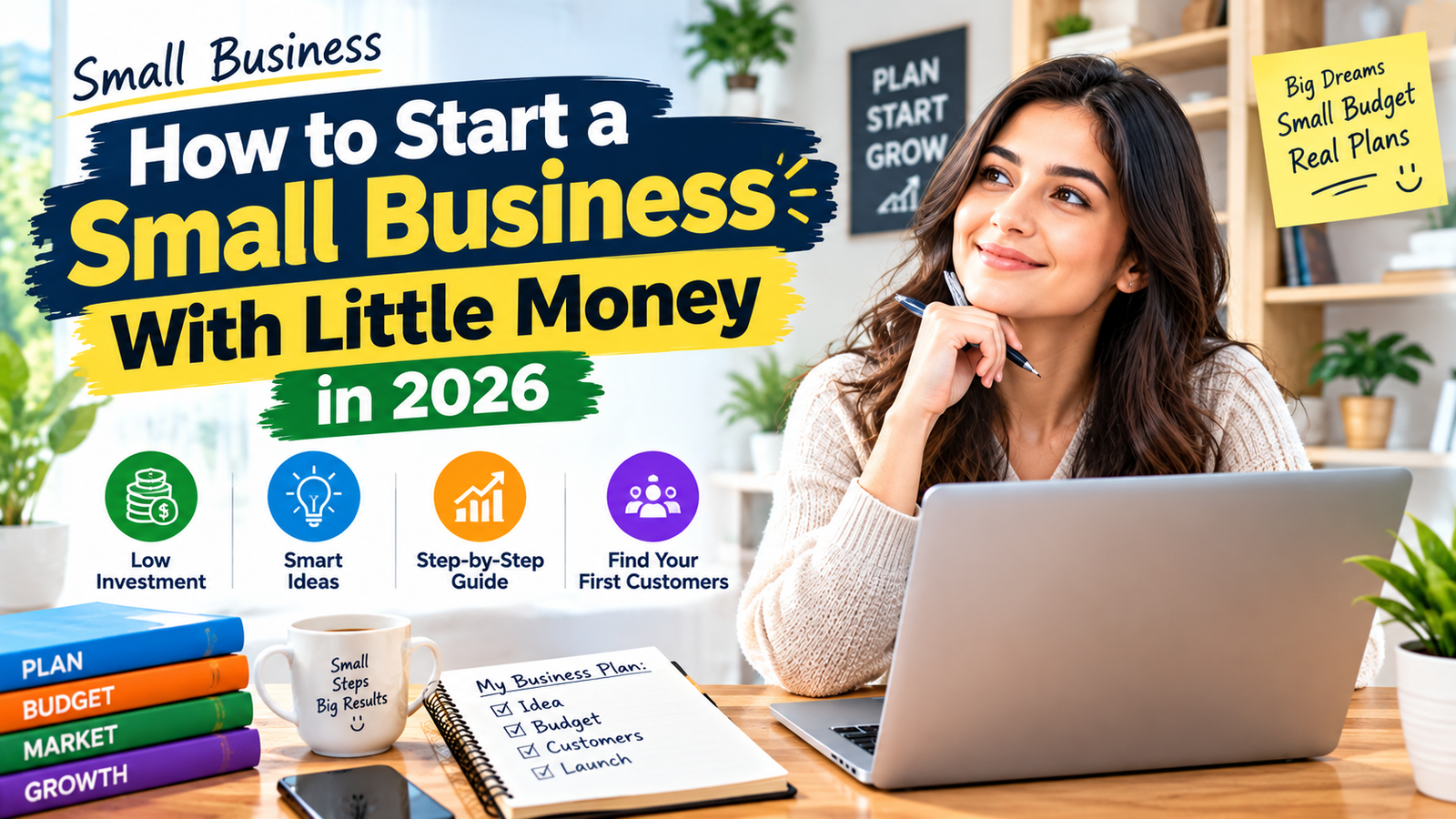
How to Start a Small Business With Little Money in 2026
You do not need a large investment to begin your entrepreneurial journey. Learn how to choose an affordable business idea, control your costs, validate demand, and find your first paying customers.
Starting a business can feel expensive when you consider equipment, marketing, inventory, software, and other startup costs. However, many businesses can begin on a small scale without renting an office or hiring employees immediately.
The key is to choose a business model that fits your existing skills and resources. Instead of investing heavily before you have customers, focus on solving a real problem, testing your offer, and improving it based on feedback.
This guide explains how to start a small business with little money in 2026, including affordable business ideas, budgeting strategies, customer acquisition methods, and common mistakes to avoid.
Why Start With a Low-Cost Business?
A low-cost business can help you test your entrepreneurial skills while limiting the amount of money committed at the beginning. This is especially useful when you are exploring an unfamiliar market or building your first customer base.
Lower Financial Exposure
Keeping initial expenses small can reduce the financial pressure of starting out. You may be able to learn from early mistakes without carrying the costs of a large office, substantial inventory, or a full team.
Faster Market Testing
A simple service or small product offering can help you discover whether customers are willing to pay for your solution. Real customer behavior provides stronger evidence than assumptions alone.
Room to Improve
Starting small gives you the opportunity to adjust your pricing, target audience, and service before expanding. Growth can follow when you have evidence that the business model is workable.
10 Small Business Ideas You Can Start With Little Money
The following ideas may be suitable for beginners, depending on their skills, location, and available resources. Startup costs are relative categories rather than guaranteed budgets.
1. Freelance Writing
Businesses need blog articles, website copy, newsletters, product descriptions, and other written content. If you can research topics and communicate clearly, freelance writing may be a practical service to test.
Getting started: Prepare a few writing samples, choose a subject area, create a portfolio, and contact relevant businesses with specific content ideas.
Startup cost: Low if you already have a suitable computer and internet access.
Revenue model: Per article, per project, or recurring content packages.
2. Virtual Assistant Services
Entrepreneurs and small businesses may need help with scheduling, online research, email organization, document formatting, and customer support.
Getting started: List the tasks you can perform reliably, define your working hours, and offer a clearly scoped service package.
Startup cost: Low.
Revenue model: Hourly billing or monthly support packages.
3. Social Media Management
Small businesses often struggle to publish consistently and organize their social media content. You can offer content calendars, captions, scheduling, and basic reporting.
Getting started: Create sample posts for a particular industry and show how your content supports a business goal.
Startup cost: Low.
Revenue model: Monthly management packages or project fees.
4. Online Tutoring
If you have strong knowledge of a subject, you may be able to teach students online. Potential subjects include languages, mathematics, science, software skills, and academic writing.
Getting started: Select your subject, prepare a structured lesson, and decide how students will book sessions and make payments.
Startup cost: Low to moderate.
Revenue model: Individual lessons, group sessions, or learning packages.
5. Graphic Design
Businesses use graphics for social media, advertising, presentations, websites, and marketing materials. A focused design service can be easier to launch than a full creative agency.
Getting started: Build a portfolio of sample designs and define your deliverables and revision limits.
Startup cost: Low if you already have suitable equipment.
Revenue model: Individual projects and recurring design packages.
6. Website Design
Many businesses need a basic website, landing page, redesign, or ongoing maintenance. You can begin by learning a website platform or developing the technical skills required for your target projects.
Getting started: Create demonstration websites, explain your process, and approach businesses with relevant needs.
Startup cost: Low to moderate.
Revenue model: Website projects, redesigns, and maintenance services.
7. Video Editing
Content creators, educators, and businesses may need help editing short videos, tutorials, promotional clips, and social media content.
Getting started: Prepare sample projects using footage you have permission to use and clearly define delivery times and revision limits.
Startup cost: Low to moderate, depending on your equipment and software.
Revenue model: Per-video fees or monthly editing packages.
8. Affiliate Content Website
If you enjoy publishing helpful content, a niche website can potentially earn through relevant affiliate programs. Articles might include product comparisons, tutorials, practical guides, and honest reviews.
Getting started: Select a focused topic, research audience needs, publish useful original content, and apply to suitable affiliate programs.
Startup cost: Low to moderate, depending on domain, hosting, and other expenses.
Revenue model: Qualifying affiliate commissions.
Search traffic and affiliate clicks do not guarantee income. Building useful content and audience trust takes time.
9. Print-on-Demand Products
Print-on-demand services can produce products such as shirts, mugs, and posters after a customer places an order. This can reduce the need to purchase large amounts of inventory in advance.
Getting started: Choose a niche, create original designs, compare supplier fees, and order samples before promoting products.
Startup cost: Low to moderate.
Revenue model: The margin remaining after production, shipping, platform fees, and marketing.
10. Local Cleaning Services
Cleaning services can be suitable for people who prefer practical work in their local area. Potential customers include households, small offices, and property managers.
Getting started: Define the service area, list the tasks included in each package, estimate supplies and travel costs, and establish a booking process.
Startup cost: Low to moderate.
Revenue model: Per-visit charges or recurring service agreements.
How to Choose the Right Low-Cost Business Idea
Do not select a business only because it is popular on social media. Evaluate whether it fits your abilities and whether you can reach customers who need it.
Start With Your Existing Skills
Write down your professional skills, practical experience, interests, and available equipment. An idea that builds on your current strengths may require less training and fewer initial purchases.
Identify a Specific Customer
Define who you want to serve and what problem you will solve. For example, rather than offering marketing services to everyone, you might focus on helping local service businesses improve their websites.
Research Existing Alternatives
Review competitors, their prices, customer feedback, and service gaps. Competition can indicate demand, but your offer still needs a clear reason for customers to choose it.
Check the Practical Requirements
Consider licensing, training, equipment, payment methods, transportation, delivery, and any other requirements that apply to your location and industry.
How to Create a Small Business Startup Budget
A realistic budget helps you understand how much money you need before launching and which expenses can wait.
Separate One-Time and Recurring Costs
One-time expenses may include basic equipment, initial supplies, or registration fees. Recurring costs may include internet access, software subscriptions, hosting, transportation, or marketing.
Prioritize Essential Purchases
Purchase what is necessary to deliver your initial offer safely and professionally. Expensive branding, large inventory orders, and advanced tools may not be necessary while you are testing demand.
Plan for Unexpected Expenses
Where possible, retain a cash buffer for repairs, delayed payments, refunds, or other unexpected costs. Do not use money needed for essential personal expenses to fund an untested idea.
Understand Your Break-Even Point
Your break-even point is the sales level at which revenue covers your relevant costs.
Simple formula: Break-even sales volume = Fixed costs ÷ (Selling price per unit − Variable cost per unit).
For example, if monthly fixed costs are 100 currency units, the selling price is 20 per unit, and variable cost is 10 per unit, the break-even volume is 10 units. This simplified example excludes taxes and other costs not included in the calculation.
How to Validate Your Business Idea Before Spending Money
Validation helps you test whether potential customers are interested in your offer before you make a large investment.
Talk to Potential Customers
Ask about the problems they face, the solutions they currently use, and what they value when purchasing a product or service. Avoid leading questions that encourage people to agree with you.
Research Competitors
Look at pricing, customer reviews, delivery times, and common complaints. Use this information to identify a meaningful opportunity rather than copying another business without differentiation.
Test a Small Offer
Create a basic service package, sample product, demonstration, or landing page. Measure meaningful actions such as inquiries, bookings, and purchases instead of relying solely on likes or compliments.
Review the Results
If customers do not respond, investigate whether the problem, audience, price, offer, or marketing channel needs adjustment before spending more money.
How to Find Your First Paying Customers
Getting customers is often more challenging than choosing a business idea. Start with channels that your target audience already uses.
Use Your Existing Network
Tell relevant contacts what you offer and the kind of customer you can help. Ask for introductions when appropriate, without pressuring friends or family to purchase.
Create Useful Online Content
Publish articles, examples, tutorials, or short videos that answer questions your potential customers ask. Useful content can demonstrate your expertise and support long-term organic discovery.
Build a Simple Website or Portfolio
Explain your offer, who it is for, what customers receive, and how to contact you. Include genuine work samples and clear terms where appropriate.
Reach Out to Relevant Prospects
Research businesses that could benefit from your service and send personalized, respectful messages. Focus on a specific need rather than making generic claims.
Ask for Honest Feedback
After delivering a service, ask customers what worked well and what could improve. With their permission, use genuine testimonials to demonstrate your work.
Low-Cost Business Ideas Compared
| Business Idea | Relative Cost | Useful Starting Asset |
|---|---|---|
| Freelance writing | Low | Writing samples |
| Virtual assistance | Low | Organization skills |
| Social media management | Low | Sample content |
| Online tutoring | Low to moderate | Lesson plan |
| Graphic design | Low | Design portfolio |
| Website design | Low to moderate | Demo websites |
| Video editing | Low to moderate | Editing samples |
| Affiliate website | Low to moderate | Useful niche content |
| Print-on-demand | Low to moderate | Original designs |
| Cleaning services | Low to moderate | Supplies and checklist |
Cost categories are relative estimates, not exact budgets. Actual expenses depend on your location, equipment, suppliers, and operating requirements.
A Practical 30-Day Small Business Launch Plan
A simple launch schedule can help you move from research to real customer feedback without trying to build everything at once.
Days 1–7: Research and Choose
- List your skills, resources, and available time.
- Compare two or three suitable business ideas.
- Research competitors and customer problems.
- Select one idea to test.
Days 8–14: Build a Basic Offer
- Define your target customer and service or product.
- Calculate essential startup and delivery costs.
- Set an initial price based on costs and market research.
- Create a portfolio sample, prototype, or demonstration.
Days 15–21: Test Demand
- Talk to potential customers.
- Present your offer to relevant prospects.
- Publish a simple page or portfolio.
- Record inquiries, objections, and purchase decisions.
Days 22–30: Improve and Decide
- Review the feedback and any early sales.
- Improve your offer, pricing, or communication.
- Calculate actual expenses and remaining cash.
- Decide whether to continue testing, adjust, or explore another idea.
This is a suggested testing schedule, not a guarantee that a business will become profitable within 30 days.
Common Mistakes to Avoid When Starting With Little Money
Buying Too Much Equipment
Purchase only what you need to deliver your initial offer. Upgrade when real demand justifies the expense.
Ignoring Legal Requirements
Check registration, tax, licensing, privacy, and industry-specific requirements before operating. Rules vary by location and business type.
Setting Prices Without Calculating Costs
Include delivery time, materials, fees, transportation, software, and other relevant expenses. A high sales volume does not guarantee a healthy profit.
Expecting Immediate Income
Customer acquisition and business development take time. Avoid relying on unproven revenue projections to cover essential living expenses.
Trying Too Many Ideas at Once
Testing one idea at a time makes it easier to understand what works and where your money and effort are going.
Frequently Asked Questions
Can I start a small business with almost no money?
Some service businesses can be tested with minimal additional spending if you already have the required skills, equipment, and internet access. However, most businesses still involve some costs, and you should account for legal requirements and essential operating expenses.
What is the easiest business to start for beginners?
The easiest option depends on your skills and resources. Freelance writing, virtual assistance, tutoring, and selected digital services may be practical starting points for people with relevant abilities.
Can I start a business from home?
Yes. Writing, tutoring, design, virtual assistance, and some online retail models can operate from home. Check local regulations and any requirements specific to your industry.
How do I get customers without paid advertising?
Consider referrals, networking, relevant online communities, useful content, organic search, professional profiles, and personalized outreach. Track which methods generate qualified leads and actual purchases.
Should I borrow money to start my business?
Borrowing creates repayment obligations and additional financial risk. Before considering debt, validate demand, calculate costs, understand repayment terms, and evaluate whether you could manage repayments if sales are slower than expected.
How long does it take to make a profit?
There is no universal timeline. Results depend on demand, pricing, expenses, customer acquisition, and execution. Track actual financial performance instead of relying on guaranteed earnings claims.