
BUSINESS & ENTREPRENEURSHIP
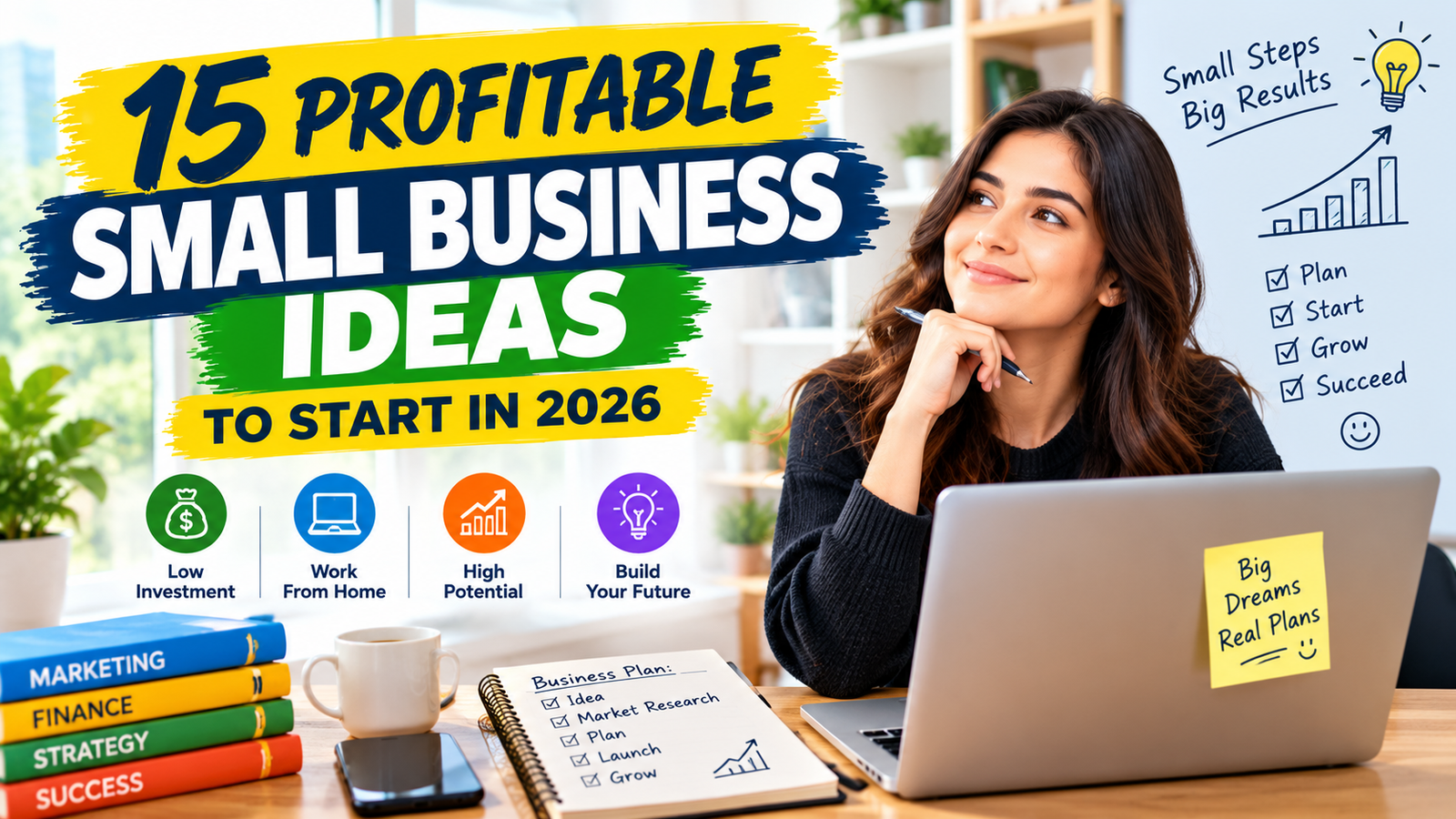
15 Profitable Small Business Ideas to Start in 2026
Discover practical business opportunities, compare startup costs, and learn how to turn your skills into a business with a clear plan for finding your first customers.
Starting a business can be an exciting way to build financial independence, develop valuable skills, and create a new source of income. However, choosing the right business idea is often the hardest first step.
You do not always need a large investment, an office, or a team to get started. Many entrepreneurs begin with a specialized skill, a simple service, or a small online business and expand as they gain experience and customers.
In 2026, opportunities exist across digital services, e-commerce, education, content creation, and local services. The best option depends on your skills, budget, location, and the needs of your target customers.
1. Digital Marketing Services
Small businesses often need help reaching customers online but cannot afford a full-time marketing team. If you understand digital marketing, you can provide specialized services to help businesses improve their online presence.
Services You Can Offer
- Search engine optimization (SEO)
- Email marketing and content strategy
- Social media advertising
- Local business marketing
- Website conversion optimization
Choose one service, develop your skills, and create a portfolio with sample projects. Then approach businesses whose needs match your expertise.
Startup cost: Low if you already have a computer and internet access.
Revenue model: Project fees, monthly retainers, or consulting.
2. Freelance Writing and Content Creation
Freelance writing can be a practical business for people who enjoy research and explaining ideas clearly. Companies need blog articles, website copy, newsletters, product descriptions, and educational content.
How to Get Started
- Create three to five strong writing samples.
- Choose a niche such as business, technology, education, or travel.
- Build a simple online portfolio.
- Contact relevant clients with specific content ideas.
- Deliver accurate, original work on time.
AI tools can assist with brainstorming and editing, but fact-checking, original insights, and editorial judgment remain essential.
Startup cost: Low.
Revenue model: Per article, per project, or recurring content packages.
3. Online Tutoring
Online tutoring allows you to teach students remotely. Potential subjects include mathematics, science, languages, programming fundamentals, academic writing, and professional skills.
Choose a subject that matches your qualifications, prepare structured lessons, and decide whether you will offer individual sessions or group classes. As demand grows, you may develop recorded lessons or downloadable study materials.
Startup cost: Low to moderate.
Revenue model: Lessons, group classes, and educational products.
4. Start an E-Commerce Store
An e-commerce business sells products through an online store or marketplace. Possible categories include home accessories, clothing, hobby supplies, gifts, and specialized products for particular audiences.
Steps to Start
- Research product demand and competitors.
- Compare suppliers and product quality.
- Calculate shipping, payment, advertising, and return costs.
- Create accurate product pages and clear policies.
- Test demand before purchasing substantial inventory.
Startup cost: Often moderate, depending on inventory and business model.
Revenue model: Product sales and product bundles.
Remember that sales are not the same as profit. Expenses can significantly affect your margins.
5. Print-on-Demand Business
Print-on-demand lets you sell products featuring original designs without purchasing large amounts of inventory in advance. Products may include T-shirts, mugs, posters, tote bags, and notebooks.
Choose a specific audience, create distinctive designs, and order samples to check quality and delivery times. Review supplier fees carefully before setting your prices.
Startup cost: Low to moderate.
Revenue model: Product margins after production, shipping, platform, and marketing expenses.
Use original artwork or assets you have permission to use.
6. Graphic Design Services
Businesses need visual materials for websites, advertisements, presentations, product packaging, and social media. If you have design skills, you can offer a focused service and expand as your portfolio grows.
- Social media graphics
- Business presentations
- Marketing brochures
- Brand identity materials
- Website and advertising graphics
Set clear project requirements, deadlines, deliverables, and revision limits.
Startup cost: Low if you already have suitable equipment.
Revenue model: Design projects and monthly packages.
7. Website Design and Development
Businesses use websites to explain their services, establish credibility, and generate inquiries or sales. You could build business websites, landing pages, online stores, or provide maintenance and basic technical SEO services.
Create demonstration websites, document your process, and approach businesses with identifiable website problems. Define project scope and support terms before accepting work.
Startup cost: Low to moderate.
Revenue model: Development projects, redesigns, and maintenance agreements.
8. Social Media Management
Social media managers help businesses plan content, publish consistently, and communicate with their audiences. Services can include content calendars, captions, post scheduling, community management, and performance reporting.
Build sample content for a specific industry and offer a package with clear deliverables. Avoid promising viral posts or guaranteed follower growth.
Startup cost: Low.
Revenue model: Monthly packages or individual projects.
9. Virtual Assistant Services
Virtual assistants provide remote administrative support to entrepreneurs and small businesses. Tasks may include email organization, appointment scheduling, online research, document formatting, and customer support.
Identify tasks you can perform reliably, establish communication procedures, and agree on deadlines and working hours. Protect client information and use appropriate account permissions.
Startup cost: Low.
Revenue model: Hourly billing, monthly support, or task-based packages.
10. Create and Sell Online Courses
If you have expertise in a subject and can teach it effectively, an online course may help you turn that knowledge into a product.
Before creating a complete course, test demand with a workshop, sample lesson, or small educational resource. Use feedback to improve your curriculum and identify the most useful learning outcomes.
Startup cost: Low to moderate.
Revenue model: Course sales, workshops, memberships, or educational bundles.
11. Affiliate Marketing
Affiliate marketing involves promoting products or services through tracking links. Depending on the program, you may earn a commission when a visitor completes an eligible purchase or action.
This model can work with a blog, educational website, newsletter, or other content platform. Create useful tutorials, comparisons, and honest reviews that help readers make informed decisions.
- Choose products relevant to your audience.
- Research product features, limitations, and pricing.
- Join suitable affiliate programs.
- Disclose affiliate relationships clearly.
- Track clicks and qualifying conversions.
Startup cost: Low if you already have a website.
Revenue model: Qualifying affiliate commissions.
12. Video Editing Services
Creators, educators, and businesses need polished videos for social media, websites, courses, and advertising. You can specialize in short-form videos, YouTube content, podcast clips, subtitles, or educational videos.
Create sample projects using footage you have permission to use. Define video length, turnaround time, revisions, and final file formats before beginning a project.
Startup cost: Low to moderate.
Revenue model: Per-video fees, project packages, or recurring agreements.
13. Home-Based Food Business
A home-based food business may suit people who can prepare consistent, high-quality food. Options include baked goods, specialty desserts, snack boxes, meal preparation, and catering for small events.
Start with a limited menu and calculate ingredients, packaging, delivery, labor, and waste before setting prices. Check local licensing, food safety, labeling, and home-kitchen requirements before accepting orders.
Startup cost: Low to moderate.
Revenue model: Individual orders, repeat customers, and meal packages.
14. Cleaning and Home Services
Cleaning services can be an option for entrepreneurs who prefer practical, local work. Possible services include residential cleaning, office cleaning, and move-in or move-out cleaning.
Define the scope of each service, estimate travel and supply costs, and use checklists to maintain consistent quality. Referrals and repeat bookings can help build a local reputation.
Startup cost: Low to moderate.
Revenue model: Per-visit fees, recurring appointments, or service contracts.
15. Personalized Products Business
Personalized products can appeal to customers shopping for gifts, celebrations, corporate events, or distinctive accessories. Examples include customized notebooks, gift boxes, event favors, and selected home décor.
Start with a small catalog and calculate materials, labor, packaging, shipping, and potential mistakes. Confirm names, dates, and design details before producing custom orders.
Startup cost: Low to moderate.
Revenue model: Custom product sales, bulk orders, and personalized packages.
How to Choose the Right Small Business Idea
The best business is not necessarily the most popular one. It is the one that matches your skills, resources, and customers' needs.
Evaluate Your Existing Skills
Starting with skills you already have may reduce initial costs and shorten the learning process. Choose a business you can deliver reliably or are prepared to learn properly.
Set a Realistic Budget
List essential startup costs and recurring expenses. Keep personal and business financial needs in mind, and avoid making major commitments based solely on optimistic income projections.
Validate Customer Demand
Research competitors, customer reviews, existing offers, and questions people ask. Where practical, speak directly with potential customers and test a small offer before investing heavily.
Identify Your Marketing Channels
Consider whether your customers discover solutions through search engines, referrals, local networking, social media, marketplaces, or direct outreach. Choose channels that fit their habits.
Understand Your Costs and Margins
Estimate materials, labor, shipping, software, advertising, taxes, and other relevant expenses. Revenue, profit, and cash flow are different measures, and all three matter.
Small Business Ideas Compared
| Business Idea | Startup Cost | Revenue Model |
|---|---|---|
| Digital marketing | Low | Projects and retainers |
| Freelance writing | Low | Articles and content packages |
| Online tutoring | Low | Lessons and course packages |
| E-commerce | Moderate | Product sales |
| Print-on-demand | Low to moderate | Product margins |
| Graphic design | Low | Design projects |
| Website development | Low to moderate | Projects and maintenance |
| Social media management | Low | Monthly packages |
| Virtual assistance | Low | Hourly or monthly services |
| Online courses | Low to moderate | Course sales |
| Affiliate marketing | Low | Affiliate commissions |
| Video editing | Low to moderate | Editing projects |
| Home-based food | Low to moderate | Orders and packages |
| Cleaning services | Low to moderate | Visits and contracts |
| Personalized products | Low to moderate | Custom product sales |
These are relative cost categories, not exact budgets. Actual costs depend on location, equipment, business model, and local requirements.
How to Start a Small Business Step by Step
Step 1: Define Your Customer
Identify who you want to serve, what problem they face, and why they might pay for your solution.
Step 2: Test Your Idea
Research competitors and talk to potential customers. Where possible, test a simple version of your offer before committing substantial money.
Step 3: Prepare a Startup Budget
List setup expenses, recurring costs, equipment, marketing, and any applicable licensing requirements.
Step 4: Write a Simple Business Plan
Explain what you sell, who you serve, how customers will find you, how you will price your offer, and what it costs to deliver.
Step 5: Meet Legal and Financial Requirements
Research the registration, tax, insurance, privacy, and consumer-protection rules that apply to your location and industry. Maintain accurate financial records.
Step 6: Build an Online Presence
Create an appropriate website, portfolio, business listing, online store, or professional profile. Make your offer and contact details easy to understand.
Step 7: Find Your First Customers
Try suitable channels such as referrals, networking, helpful content, relevant marketplaces, or targeted outreach. Track which activities generate actual sales.
Step 8: Measure and Improve
Track sales, expenses, customer feedback, repeat purchases, and delivery time. Use the results to improve pricing, marketing, and operations.
Step 9: Expand Carefully
Once demand and profitability are supported by evidence, consider adding products, services, staff, or marketing channels.
Common Small Business Mistakes to Avoid
Spending Too Much Before Testing Demand
Large inventory orders and expensive equipment may be unnecessary before you know whether customers want your offer. Begin with a practical, low-risk test.
Trying to Sell to Everyone
A defined customer group helps you communicate more clearly and develop an offer that solves a specific problem.
Ignoring Cash Flow
A business can make sales and still run short of cash if expenses become due before customers pay. Track the timing of incoming and outgoing money.
Copying Competitors Without Differentiation
Develop a clear reason for customers to choose you, such as specialized expertise, convenience, reliable service, or better communication.
Expecting Immediate Results
Customer trust, referrals, search visibility, and repeat sales take time to develop. Set realistic milestones and review progress consistently.
Frequently Asked Questions
What is the best small business to start in 2026?
There is no single best business for everyone. Freelance writing, tutoring, website development, digital marketing, and selected local services may suit people with relevant skills and limited startup capital. Consider customer demand, competition, available resources, and your ability to deliver value.
Which business can I start with a small budget?
Service-based businesses such as virtual assistance, freelance writing, tutoring, and selected digital marketing services can often be tested with relatively little upfront spending if you already have the necessary skills and equipment.
Can I start a business from home?
Yes. Many businesses can operate from home, including writing, tutoring, graphic design, virtual assistance, and certain e-commerce models. Check local licensing, tax, zoning, and industry-specific requirements first.
Are online businesses profitable?
Some online businesses are profitable, while others struggle. Results depend on demand, competition, pricing, operating costs, customer acquisition, and execution. An online business is not automatically passive or risk-free.
How can I find my first customers?
Identify where your target customers look for solutions. Depending on your business, useful channels may include referrals, networking, search engine optimization, educational content, marketplaces, and targeted outreach.
Do I need a website to start a business?
Not always. Some businesses begin through referrals, marketplaces, or social platforms. A website can help explain your services, present your portfolio, answer customer questions, and establish an online presence.
How long does it take for a small business to become profitable?
There is no universal timeline. Profitability depends on sales, margins, expenses, cash flow, and customer acquisition. Build a realistic financial plan and review actual results instead of relying on guaranteed timelines.