
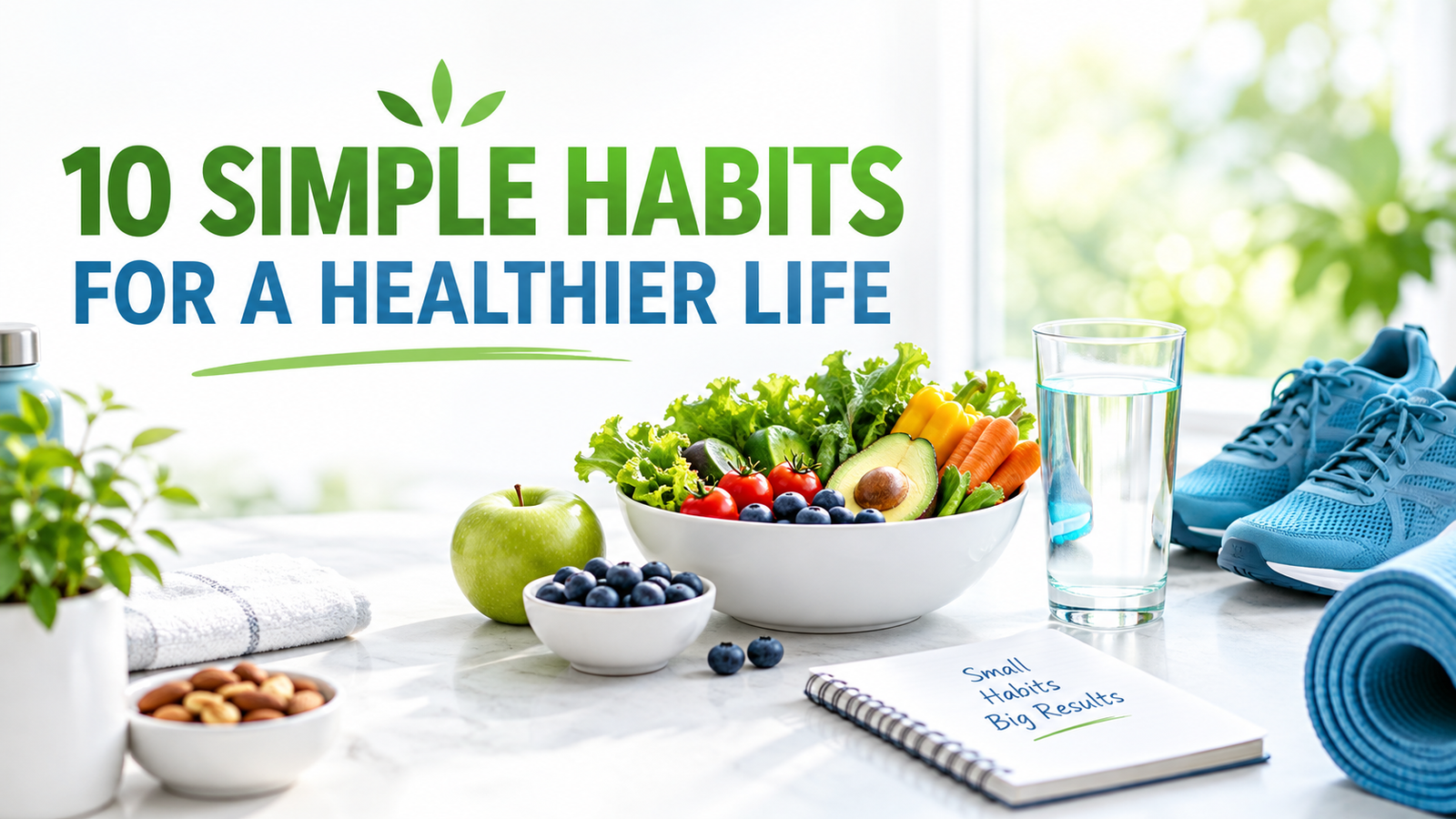
Good health doesn’t require a perfect diet, an intense workout routine, or major lifestyle changes overnight. In many cases, small and consistent habits can make a meaningful difference to your overall well-being.
Here are 10 practical habits that can help you build a healthier lifestyle.
1. Eat a Balanced Diet
Try to include a variety of foods in your daily meals, including vegetables, fruits, whole grains, protein sources, and healthy fats. A balanced diet provides your body with the nutrients it needs for energy, growth, and normal functioning.
Rather than focusing on completely eliminating certain foods, aim for variety and moderation.
2. Drink Enough Water
Water plays an important role in many processes in the body. Make water your main everyday beverage and drink regularly throughout the day. Your fluid needs can vary depending on factors such as weather, physical activity, and overall health.
3. Stay Physically Active
Regular physical activity can support cardiovascular health, muscle strength, mobility, and mental well-being. You don't necessarily need an expensive gym membership. Walking, cycling, swimming, stretching, or playing a sport can all be ways to stay active.
Start with an amount that feels manageable and gradually build your routine.
4. Get Quality Sleep
Sleep is an important part of a healthy lifestyle. Adults generally need around 7–9 hours of sleep each night, although individual needs vary.
A consistent bedtime, a comfortable sleeping environment, and limiting stimulating activities before bed can help support better sleep habits.
5. Manage Stress
Some stress is a normal part of life, but ongoing stress can affect both physical and mental well-being. Consider activities that help you relax, such as walking, reading, spending time with friends and family, meditation, or practicing slow breathing.
If stress becomes overwhelming or interferes with daily life, consider speaking with a qualified healthcare professional.
6. Avoid Smoking and Tobacco
Smoking and tobacco use are major risk factors for numerous health problems. If you smoke, quitting can provide significant health benefits. Professional support and evidence-based cessation treatments can make quitting easier for many people.
7. Maintain Healthy Relationships
Social connection is an important part of overall well-being. Spending time with supportive friends, family members, or community groups can provide companionship and emotional support.
Healthy relationships can also encourage positive habits and help people cope with difficult periods.
8. Take Care of Your Mental Health
Mental health deserves the same attention as physical health. Make time for activities you enjoy, maintain social connections, and recognize when you may need additional support.
There is no shame in talking to a mental health professional when you are struggling.
9. Keep Up With Preventive Healthcare
Regular health checkups and appropriate screening can help identify certain health problems early. Depending on your age, sex, family history, and risk factors, your healthcare provider may recommend specific tests or vaccinations.
Don't ignore persistent or unusual symptoms simply because they seem minor.
10. Make Sustainable Changes
The healthiest lifestyle is one you can maintain. Instead of trying to change everything at once, choose one or two habits and work on them consistently.
For example, you might begin by taking a 20-minute walk each day or adding an extra serving of vegetables to your meals. Once a habit becomes comfortable, you can build on it.
Final Thoughts
Healthy living is not about being perfect. It is about making practical choices consistently and adapting them to your individual circumstances.
A balanced diet, regular movement, sufficient sleep, stress management, healthy relationships, and preventive healthcare can all contribute to better overall well-being. If you have a medical condition or specific health concerns, speak with a qualified healthcare professional before making significant changes to your diet, exercise, or treatment.